


Ut ultricies imperdiet sodales. Aliquam fringilla aliquam elementum.
Level 13, 2 Elizabeth St,
Melbourne, Victoria 3000
Australia
Monday - Friday 800 - 1600
+61(0) 383 766 284
noreply@envato.com

Progettazione
La customizzazione è un fattore importantissimo per i prodotti utilizzati nella ricerca, per questo motivo progettiamo continuamente nuovi accessori e prodotti custom.
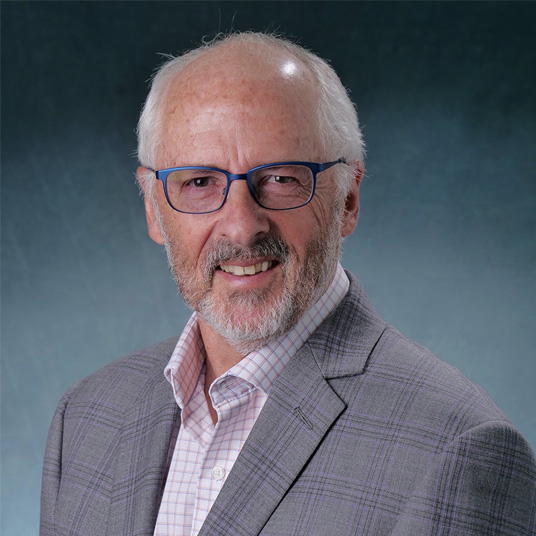
Roger Enoka
He completed undergraduate training in physical education at the University of Otago in New Zealand (1968-1970) prior to obtaining an MS degree in biomechanics and a PhD in kinesiology from the University of Washington in Seattle (1974-1981). He subsequently held faculty positions in the Department of Exercise and Sport Science and the Department of Physiology at the University of Arizona in Tucson (1981-1993) and the Department of Biomedical Engineering at the Cleveland Clinic Foundation (1993-1996). He is currently professor in the Department of Integrative Physiology (1996-present). He also has adjoint appointments as professor in the Department of Medicine (Geriatrics) and the Department of Neurology at the University of Colorado Anschutz Medical Campus. Dr. Enoka is a motor unit physiologist who characterizes changes in motor function as a consequence of adjustments in the activity of motor-unit populations.

Alessandro Del Vecchio
He received a PhD in Neuroscience after researching the neural control of muscles at the motor unit population level at the Department of Physiology, University of Rome, and the Neurorehabilitation Engineering Group at the University of Göttingen. After completing a four-year postdoctoral fellowship at the Department of Bioengineering, Imperial College London, he established his research group as an Assistant Professor (2020) and later became a Full Professor (2025) at Friedrich-Alexander-Universität Erlangen-Nürnberg (FAU). He has received several prestigious awards, including the Best Paper Award from the Journal of Physiology (Neuroscience section), a Medical Valley Award, an Emmy Noether grant from the German Research Foundation (DFG), and two individual ERC projects. Dr. Del Vecchio is a computational and experimental neuroscientist specializing in human studies, with core expertise in biosignal analysis, EMG signal interpretation, and the application of these technologies in patients with neural lesions.
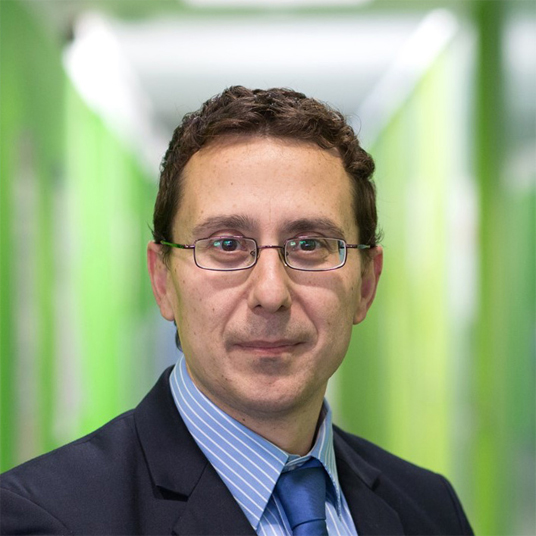
Dario Farina
He received Ph.D. degrees in automatic control and computer science and in electronics and communications engineering from the Ecole Centrale de Nantes and Politecnico di Torino and an Honorary Doctorate degree in Medicine from Aalborg University, Denmark. He is currently Full Professor and Chair in Neurorehabilitation Engineering at the Department of Bioengineering of Imperial College London, UK. He has previously been Full Professor at Aalborg University, Aalborg, Denmark (until 2010) and at the University Medical Center Göttingen, Georg-August University, Germany. His research focuses on biomedical signal processing, neurorehabilitation technology, and neural control of movement. Within these areas, he has (co)-authored more than 500 papers in peer-reviewed Journals. Among other awards, he has been the recipient of the 2010 IEEE Engineering in Medicine and Biology Society Early Career Achievement Award and received the Royal Society Wolfson Research Merit Award in 2016. Professor Farina has been the President of the International Society of Electrophysiology and Kinesiology (ISEK) (2012-2014) and is currently the Editor-in-Chief of the Journal of Electromyography and Kinesiology.

Allison Hyngstrom
Allison Hyngstrom graduated from Augustana College with a degree in biology and then completed a MS in Physical Therapy at Washington University. She then practiced as a physical therapist for at the Rehabilitation Institute of Chicago (now Shirley Ryan AbilityLab). Dr. Hyngstrom completed her PhD in Neuroscience at Northwestern University and post-doctoral studies in Marquette University’s Department of Biomedical Engineering. She is now a Professor and Chair of the Department of Physical Therapy at Marquette University. Dr. Hyngstrom is also the Director of the Clinical Research Scholars program for the Clinical and Translational Science Institute of Southeastern Wisconsin and Chair of the NIH Study Section Motor Function Speech and Rehabilitation. Dr. Hyngstrom’s research focuses on understanding mechanisms of motor impairment in stroke survivors and the development of therapies that optimize walking function.

Assistenza
L’assistenza è una caratteristica che ci distingue. Un set-up di ricerca è sempre unico e necessita di una stretta collaborazione tra ricercatore e azienda.

Simon Avrillon
Simon Avrillon completed his PhD in 2019 at the French Institute of Sport and Université Paris-Saclay. He then undertook postdoctoral research at Northwestern University in Chicago and at Imperial College London. He is currently a research fellow at Nantes Université. The central focus of his research is understanding how the nervous system coordinates motor units to produce movement in both healthy and pathological states. To investigate this, he employs experimental approaches that track the spiking activity of large motor unit populations during controlled and natural tasks. Additionally, he uses neural interface-based tasks, in which participants learn to modulate their motor unit activity in real time. On the applied side, he is exploring innovative methods for patients to interact with external devices and virtual environments using their residual motor unit activity.
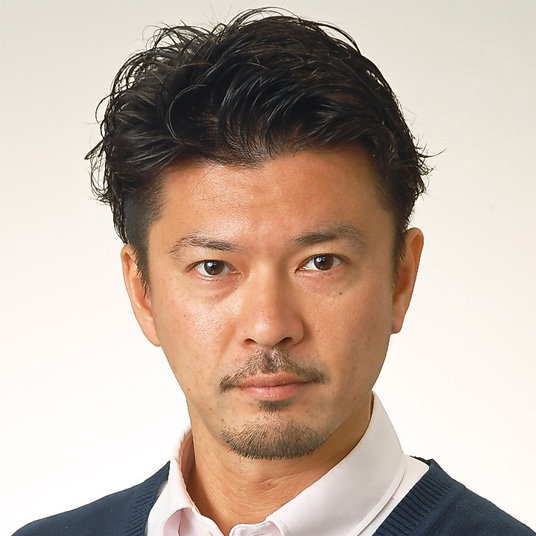
Kohei Watanabe
Professor of School of Health and Sport Sciences (Director of Laboratory of neuromuscular biomechanics) at Chukyo University, Toyota, Japan. He received M.S. degree from Nippon Sports Science University in 2007 and the PhD degree from Nagoya University in 2010. From 2010 to 2011, he was working at Laboratory of Applied Physiology, Graduate School of Human and Environmental Studies, Kyoto University as a Postdoctoral researcher of Japan Society for the Promotion of Science. In 2011, he was also working at Laboratory for Engineering of the Neuromuscular System (LISiN) of Politecnico di Torino, Italy as a visiting researcher. In 2012 he was appointed as Associate Professor of School of International Liberal Studies at Chukyo University, Japan. In 2020, he was assigned as Professor Faculty of Liberal Arts and Sciences at Chukyo University, Japan. He worked as ISEK council from 2012 to 2014 and 2016 to 2022 and takes on congress chair of ISEK2020 (Online conference). His research interest is effect of aging on neuromuscular function and its countermeasures.

Design
Dal 2012 abbiamo abbinato alla tecnologia avanzata delle nostre macchine, il design che contraddistingue i prodotti Made in Italy.

Jakob Skarabot
Jakob Skarabot completed his PhD in Neurophysiology at Northumbria University in 2019. He then joined Loughborough University as a Vice-Chancellor’s Independent Research Fellow before taking up an independent position as Lecturer in 2020 and later Senior Lecturer in 2024 in Neuromuscular Physiology within the School of Sport, Exercise and Health Sciences. Dr. Skarabot employs experimental and computational approaches to investigate motoneuron physiology in health and disease, including conditions such as motor neuron disease and musculoskeletal disorders like osteoarthritis.
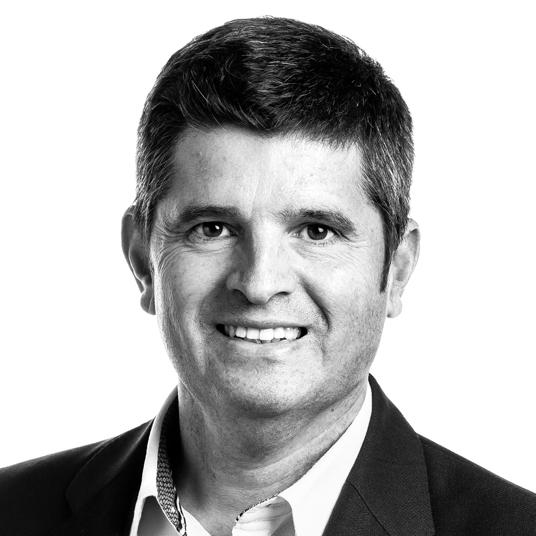
José L. Pons
Professor Pons graduated in Mechanical Engineering, Universidad de Navarra, in 1992, and obtained a MSc in Information Technologies, Universidad Politécnica de Madrid, in 1994. In 1996, he earned his PhD in Physics from Universidad Complutense de Madrid. In 1999, he was awarded a position as Tenured Scientist at the Spanish National Research Council, in 2007 a position as Research Scientist at the Centre for Robotics and Automation and in 2008 a position as Full Professor at CAR. In July 2014, he was appointed Full Professor at Cajal Institute, where he led the Department of Translational Neuroscience and the laboratory for Neurorehabilitation. Dr. Pons currently serves as the Scientific Chair of the Legs & Walking AbilityLab at Shirley Ryan AbilityLab. In addition to his research leadership role at SRAlab, he holds appointments as Professor at the Department of Physical Medicine & Rehabilitation, Feinberg School of Medicine and at the Departments of Biomedical Engineering and Mechanical Engineering, McCormick School of Engineering, Northwestern University.
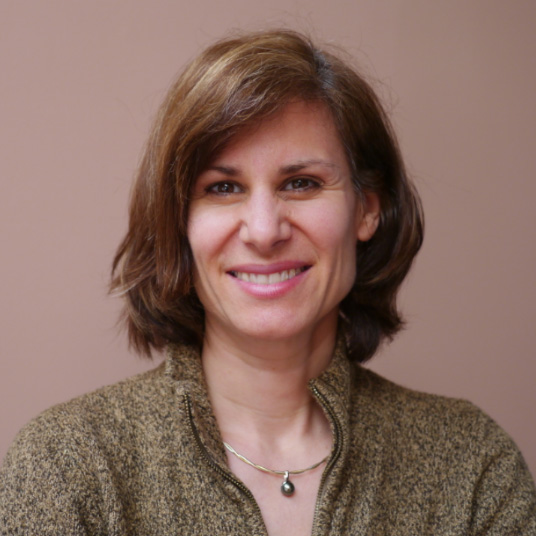
Monica Gorassini
Monica Gorassini completed an undergraduate degree in human biology at the University of Guelph (1985-1989) and a PhD in neurophysiology at the University of Alberta (1989 -1994) in Edmonton with post-doctoral studies at the University of Copenhagen (1994-1995) and University of Alberta (1996-1999) using both animal and human models of cerebellar and spinal cord injury. Dr. Gorassini joined the Department of Biomedical Engineering at the University of Alberta in 1999 and is the Director of the Sensorimotor Rehabilitation Neuroscience group and committee member of the International Motoneuron Society. By integrating both animal and human studies, Dr. Gorassini examines changes in spinal motoneurons and neuronal circuits following spinal cord injury, cerebral palsy and amyotrophic lateral sclerosis (ALS) and the mechanisms of motor recovery and spasticity reduction in response to rehabilitative and sensory stimulation interventions.

Filipe Oliveira Barroso
Filipe Oliveira Barroso received his Ph.D. in Biomedical Engineering from University of Minho (Portugal) in 2016. After that, he was a Postdoctoral Fellow at Feinberg School of Medicine – Northwestern University (Chicago, IL, U.S.A.) and Cajal Institute – CSIC (Madrid, Spain), where he received prestigious awards, including the Ramón y Cajal Postdoctoral Fellow, Junior Leader Retaining fellowship from ”la Caixa” Foundation and the Excellence Grant RyC-MaX from CSIC. Currently, he is the group leader of the Neural Engineering Lab (Cajal Neuroscience Center – CSIC, Alcalá de Henares, Spain). His lab designs interventions to promote neurorecovery through neural interfaces. His interests include neural engineering, neurorehabilitation, electromyography, tremor, movement disorders, motor control, muscle synergies, biomechanics and wearable robots.

Cristina Piazza
Cristina Piazza received a B.Sc. in Biomedical Engineering, a M.S. in Automation and Robotics Engineering and a PhD degree in Robotics from the University of Pisa (Italy). During her PhD, she had a prominent role in the participation to several international competitions, such as leading the SoftHand Pro team in Cybathlon Powered Arm Prosthesis Global Edition 2020. She subsequently moved to Chicago where she worked as a postdoctoral researcher at Northwestern University and Shirley Ryan AbilityLab. Since 2020, Prof. Piazza is tenure track assistant professor for Healthcare and Rehabilitation Robotics at the Technische Universität München (TUM). Dr. Piazza has received several academic awards, including the best paper award at the conference IEEE Humanoid 2012 and IEEE CBS 2025, the Dr. Kanako Miura Award, and PhD Talent 2019 award for the best PhD Thesis at the University of Pisa. She is currently co-chair of the IEEE/RAS Technical Committees for Robotic Hand, Grasping and Manipulation (since 2022), and IEEE/RAS Technical Committees for Cyborgs and Bionic Systems (since 2023). She serve as Editor-in-Chief and Associate Editor for several major IEEE Journals and Conferences and as General Chair for IEEE Cyborg and Bionic Systems 2026.
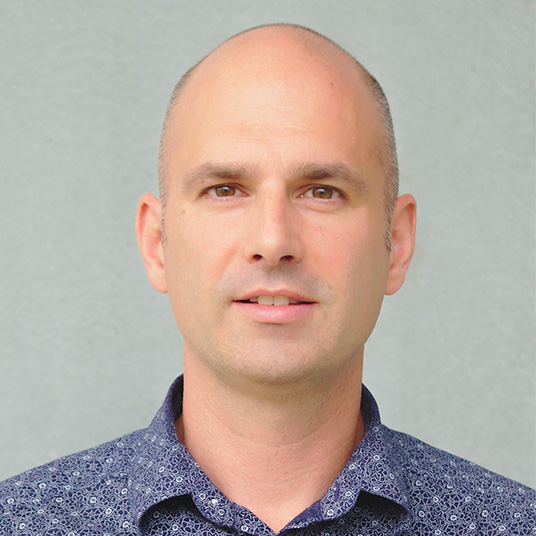
François Hug
François Hug received his PhD in human movement sciences from Aix-Marseille Université (France) in 2003. He has been Full Professor at Nantes Université (France) until he moved to Université Côte d’Azur (France) in 2021. He is an honorary fellow of the Institut Universitaire de France (IUF) and an honorary professor at the University of Queensland (Australia) where he spent >4.5 years between 2011 and 2019. His research focuses on the neural control of movement. Within this area, Francois has (co)-authored more than 200 papers in peer-reviewed journals. He has been serving on the editorial board of Journal of Electromyography and Kinesiology since 2009 and he is an expert for the Consensus for Experimental Design in Electromyography (CEDE) project. He is currently a council member of the International Society of Electrophysiology and Kinesiology (ISEK).
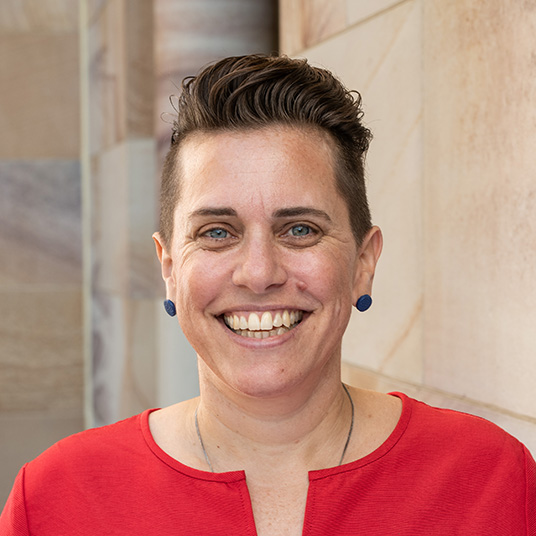
Kylie Tucker
Kylie Tucker is a Professor in the School of Biomedical Sciences at The University of Queensland, where she leads the Motor Control and Pain Research group. Her work focuses on the neural control of movement in health and disease, spanning pain-related adaptations in motor control, quantitative electromyography, and biomechanics – across the lifespan, including childhood neuromotor development, adolescent musculoskeletal health and adult neuromotor disorders. Professor Tucker has authored more than 120 peer-reviewed journal articles. Notable contributions include foundational work on movement adaptations in pain, advances in elastography for estimating individual muscle forces, and consensus guidance for experimental design in electromyography (CEDE). Her research program is highly collaborative, bridging basic science and clinical application to inform rehabilitation and performance. Professor Tucker intentionally fosters a supportive academic culture, empowering academics in their pursuit of excellence. She is the current President of ISEK having contributed to the society’s leadership since 2018.

Deborah Falla
Deborah Falla completed her undergraduate degree and PhD in Physiotherapy at the University of Queensland, Australia. She is now a Professor of Rehabilitation Science and Physiotherapy at the University of Birmingham, UK and is the Director of the Centre of Precision Rehabilitation for Spinal Pain (CPR Spine). Her research focuses on musculoskeletal disorders, with a core interest in characterising neuromuscular adaptations to pain. She has published over 400 papers in international, peer-reviewed journals, and has delivered more than 40 keynote lectures on this topic. Additionally, she has delivered over 250 invited post-graduate workshops on the management of pain to health care practitioners in over 30 countries ensuring translation of her research to the benefit of patients. Among other awards, she was awarded Fellow of the International Society of Electrophysiology and Kinesiology (ISEK) in 2022 and the Delsys Prize for Electromyography Innovation in 2004. She served as President of ISEK between 2016-2018 and is currently an Associate Editor of the Journal of Electromyography and Kinesiology (since 2016).
Questa è una pagina di esempio. Differisce da un articolo di un blog perché rimane sempre allo stesso posto e (in molti temi) appare nel menu di navigazione. Molte persone iniziano con una pagina di Informazioni che li presentano ai visitatori del sito. Potrebbe apparire una presentazione del tipo:
Ciao! Sono un fattorino ciclista di giorno, aspirante attore di notte e questo è il mio sito web. Vivo a Los Angeles, ho un grande cane di nome Jack e mi piace la piña colada. (E prendere la pioggia)
…o qualcosa di simile:
La Società XYZ Aggeggi è stata fondata nel 1971 e da allora fornisce al pubblico aggeggi di ottima qualità. Situata a Fantasilandia, XYZ impiega oltre 2.000 persone e realizza ogni sorta di aggeggio fantastico per la comunità di Fantasilandia.
Come nuovo utente di WordPress, dovresti andare nella tua Bacheca per eliminare questa pagina, e crearne delle nuove per i tuoi contenuti. Divertiti!